
If you love the look and heat of a wood-burning stove but don’t have a chimney, you’re not alone — and you still have practical, attractive options. This guide outlines how to get a log burner without a chimney, what each solution delivers, how much installation typically involves and the questions to ask before you buy.
You may also find Regulations: building regs, HETAS, DEFRA, smoke control – what you must know before buying a stove useful for related guidance.
Why homeowners want a log burner without a chimney
Many people want the ambience, efficient heat and lower heating bills that a log burner provides, yet live in properties with no usable chimney: flats, bungalows, homes with blocked or unsafe chimneys, or modern builds where a traditional chimney was never installed. Fortunately, modern stoves and appliances mean you can enjoy a wood-style fire in more homes than ever.
Real solutions: how you can have a log burner without a chimney
There are several proven routes, depending on whether you want a wood-fired flame, a lookalike alternative or a permanent heat source. Each option has pros and cons, so match the solution to your goals and property constraints.
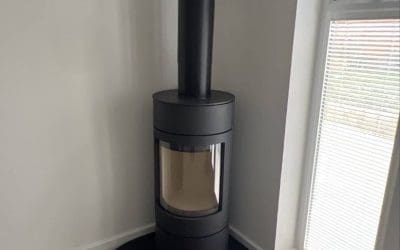
- Twin-wall flue to an external wall – A stove installed on an internal wall can use a twin-wall insulated flue that runs directly out through an external wall to the outside. This is a common approach when an internal chimney is absent and offers real wood burning with controlled smoke discharge.
- Direct/ balanced flue stoves – These models draw air from outside and vent combustion gases directly outside through a short flue. Balanced flues are more common for gas, but some specialist wood stoves use purpose-built external flue systems.
- Flueless gas stoves – If you prefer the look of logs without managing wood, a flueless gas stove can fit where there’s no chimney. They require good ventilation and must meet local regulations but give instant heat and low maintenance.
- Biofuel or gel log burners – Bioethanol and gel fuel burners produce a real flame without a chimney. They’re ventless, relatively simple to install, and ideal for rooms where installing a flue would be impractical. They do need careful siting and fuel handling.
- Electric log-effect stoves – For a zero-emission, plug-in option that needs no flue or ventilation, electric stoves recreate log visuals and heat with convected warmth or a concealed fan heater.
Choosing between wood, gas, biofuel and electric
Think about how you’ll use the stove: do you want the ritual of burning logs and the maximum heat output, or are you after ambience and ease of use? Real wood gives the strongest heat and character, but needs ash cleaning, fuel storage and a suitable flue. Gas and electric models are lower-maintenance and often better for flats or more restricted properties.
Costs, installation and practical checks
Installing a log burner without a chimney can be straightforward or more involved depending on the route:
- Twin-wall external flue installation – Expect costs for the stove, materials and a qualified installer. Installation involves cutting an external wall outlet and weatherproofing the flue. Structural checks and planning permission are rarely needed, but your installer will advise.
- Flueless gas or biofuel options – Generally cheaper to install but check ventilation requirements. Some flueless gas appliances are not permitted in certain smoke control areas, so confirm local rules.
- Electric stoves – Lowest installation complexity; usually only an electrical supply is needed. Good for renters or quick upgrades.
Always use a HETAS-registered installer for wood-burning work and gas-safe engineers for gas appliances. For health and legal peace of mind, check recent guidance such as building regs and smoke control rules before you commit.
You may also find Why Visiting a Fireplace Showroom Matters Before You Buy useful for related guidance.
Addressing common objections and safety concerns
- “I don’t want smoke or soot in the house” – A correctly installed twin-wall flue or balanced flue keeps combustion products outside. Biofuel and electric options eliminate smoke entirely.
- “Is it legal where I live?” – Some areas have smoke control orders restricting solid fuel. Your retailer or installer should check local regulations and recommend compliant appliances.
- “I rent or can’t alter the building” – Portable electric or biofuel burners provide the atmosphere without structural changes. For landlords, low-impact gas appliances might be an option with proper approvals.
- “Will it heat my home effectively?” – Heat output varies by model. A stove’s kW rating and room size guidance will tell you whether it’s suitable. For whole-house heating, consider a boiler stove; for single rooms, a dedicated room stove or electric model is often enough.
How to choose the right appliance and next steps
Follow a straightforward buying checklist to pick an option that fits your home and goals:
- Decide whether you want real wood flame, gas, biofuel or electric.
- Measure the room and check the stove’s kW output against the room size.
- Confirm flue or ventilation requirements and whether a twin-wall flue can be routed to an external wall.
- Check local smoke control regulations and whether the appliance is approved for your area.
- Get quotes from HETAS-registered installers or Gas Safe engineers and ask for a written installation plan and warranty.
If you’d like to see options in person, visiting a showroom helps you compare finishes, sizes and real flame effects — see why a showroom visit is a smart step.
Ready to discuss a log burner without a chimney? Our team can explain the right appliances for your home, arrange on-site surveys and provide installation quotes. If you want to ask a specific question, our Contact us page is the quickest way to get started.
Whatever route you choose, modern solutions let you enjoy the look and warmth of a log burner without the need for a traditional chimney — safely, legally and in line with your lifestyle.
You may also find Log Burners Bournemouth: Choose a Cosy, Efficient Stove for Your Home useful for related guidance.
Frequently asked questions
Can I install a wood-burning stove without a chimney?
Yes. You can install a wood-burning stove without an internal chimney by using a twin-wall insulated flue routed through an external wall, or by installing a suitable balanced flue system. Installation must be done by a HETAS-registered installer and meet building regulations and local smoke control rules.
Are biofuel or electric log burners a good alternative?
Bioethanol and electric log-effect stoves are excellent alternatives when a chimney or flue is impractical. They produce a real flame effect (bioethanol) or realistic visuals (electric), require minimal installation and avoid smoke. Consider fuel running costs for bioethanol and check ventilation and siting requirements.
Do I need planning permission to fit a flue through an external wall?
Most external flue installations are permitted development and don’t need planning permission, but exceptions exist — for example, on listed buildings or in conservation areas. Your installer should advise and, if necessary, help with any permissions.
How do I know what size stove I need?
Choose a stove with a kW output suited to the room’s volume. As a rule of thumb, a well-insulated room requires roughly 1kW per 14–16m², but many variables (insulation, ceiling height, open-plan spaces) affect this. Ask a retailer or installer to calculate the correct size during a site survey.